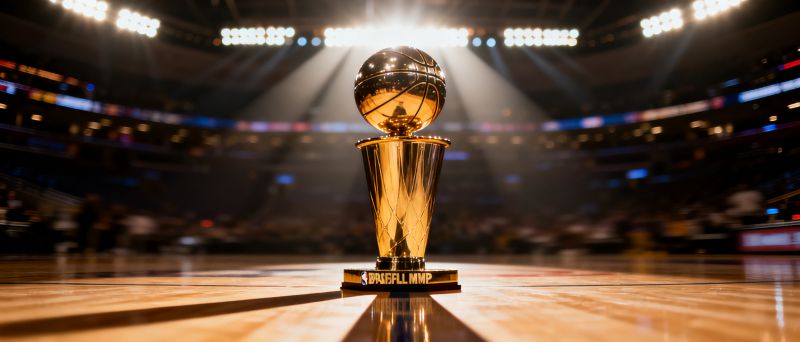
n 2015, Andre Iguodala won the NBA Finals MVP award while coming off the bench. That single fact still baffles casual fans, yet it perfectly captures the award's essence. It's not about gaudy stats or regular-season dominance. It's about who shifted the series when it mattered most. The voters—a panel of eleven media members—rewarded Iguodala for his defense on LeBron James and his timely shot-making. Was it the right call?Maybe not. Stephen Curry averaged 26 points per game. But the NBA Finals MVP often hinges on narrative, matchups。
and a handful of pivotal possessions. That's the beauty and the frustration of it.Look at the modern era. Since 2010, only two players have won the award without also being the regular-season MVP in that same season: Kawhi Leonard in 2014 and Andre Iguodala in 2015. Leonard's case is instructive. He averaged just 17.8 points per game in the 2014 Finals, but his defense on LeBron James was suffocating. The voters saw a young player rising to the moment. That's a pattern. The NBA Finals MVP frequently goes to the best player on the winning team, sure, but 'best' is defined by impact, not raw numbers. In 2020。LeBron James won his fourth Finals MVP, but Anthony Davis received four votes. The split revealed how closely voters watched specific matchups. James guarded Jimmy Butler at times;Davis anchored the paint. Both were vital. The award doesn't always reflect a unanimous consensus.History offers more nuance. In 1980, Magic Johnson won Finals MVP as a rookie, filling in for an injured Kareem Abdul-Jabbar at center. That performance—42 points, 15 rebounds, 7 assists—is legendary. But consider 1981: Cedric Maxwell won the award over Larry Bird. Maxwell averaged 17.7 points and 9.5 rebounds, while Bird put up 15.3 points, 15.3 rebounds, and 7 assists. Voters rewarded Maxwell's efficiency and defense. It's a reminder that the NBA Finals MVP isn't a lifetime achievement award;it's a series-specific judgment. That's why Tim Duncan won in 1999, 2003, and 2005。
but Tony Parker won in 2007 and Kawhi Leonard in 2014. The Spurs' system spread credit, and the award followed the matchup.What does this mean for players today?
The NBA Finals MVP can elevate a career. Just ask Chauncey Billups。who won in 2004 and cemented his legacy as 'Mr. Big Shot.' Or Paul Pierce in 2008, who outdueled Kobe Bryant and shed the label of a star who couldn't win the big one. The award carries weight in Hall of Fame discussions, even if the sample size is tiny—four to seven games. I've always thought the NBA Finals MVP should be renamed the 'Series MVP' to reflect its scope. But the current name sticks because the Finals are the league's biggest stage. And on that stage, one player usually rises above the rest—sometimes predictably, sometimes shockingly. That unpredictability is what makes the award worth debating every June.